


Read time: 6 min
Every hospital bag checklist online looks the same: muslin cloths, going-home outfit, “something for you too!” in a cheerful font. What it doesn’t tell you is what you’ll actually reach for during the hours you’re sat in a chair that isn’t built for sitting in.
Start with a conversation, not a checklist
Before any packing happens, talk to your wife about who’s packing what. Some women would rather pack their own bag themselves — toiletries, comfort items, the specifics only she knows she’ll want — plus the baby’s bag separately. If that’s her preference, your job becomes everything else: the practical layer underneath.
But you should still sit with her while she sorts through what she and the baby need, so you’ve actually seen where things end up. Labour is not the moment for her to be talking you through zip pockets — if she asks for something specific, you want to be reaching for it, not searching for it. Helping her pack is what makes that possible later.

Here’s Dad Diary’s list for Hospital bags;
For her
- Phone charger — the long one, or a portable charger. Every socket in a maternity ward is approximately two metres too far from the bed. A 2m cable solves it; a portable charger solves it even if the socket’s out of reach entirely.
- Her own pillow, in a coloured pillowcase. Hospital pillows are thin and every pillow on the ward is identical white. A coloured case means it comes home with you and doesn’t get mixed up with hospital stock.
- Snacks she can eat without needing a fridge or cutlery. Ward meal times rarely line up with when labour actually happens, so bring something she can eat one-handed, whenever she’s ready for it.
- A dressing gown that isn’t precious to her. It’s coming home in a bag with everything else. It will not look the same again.
- A reusable bendy straw. Sounds minor, but it means she can drink lying down after the birth without having to sit up — makes a bigger difference than it sounds.
- Her NHS maternity notes (the “red book”). These need to travel with her to every appointment and to the birth itself — worth double-checking they’re actually in the bag before you leave the house, not assumed. Think of it like taking your passport to the airport — you wouldn’t leave without it.
- A small portable fan, if you’re due in summer. Those wards get stuffy fast, and hospital air conditioning can’t always be relied on — a USB or battery fan earns its space in a hospital bag.
For the baby
- Two going-home outfits, two sizes. Newborn and 0-3 months. You genuinely don’t know which one will fit until the day.
- A hat. Hospitals are warm, but wards are draughty near the windows, and midwives will ask.
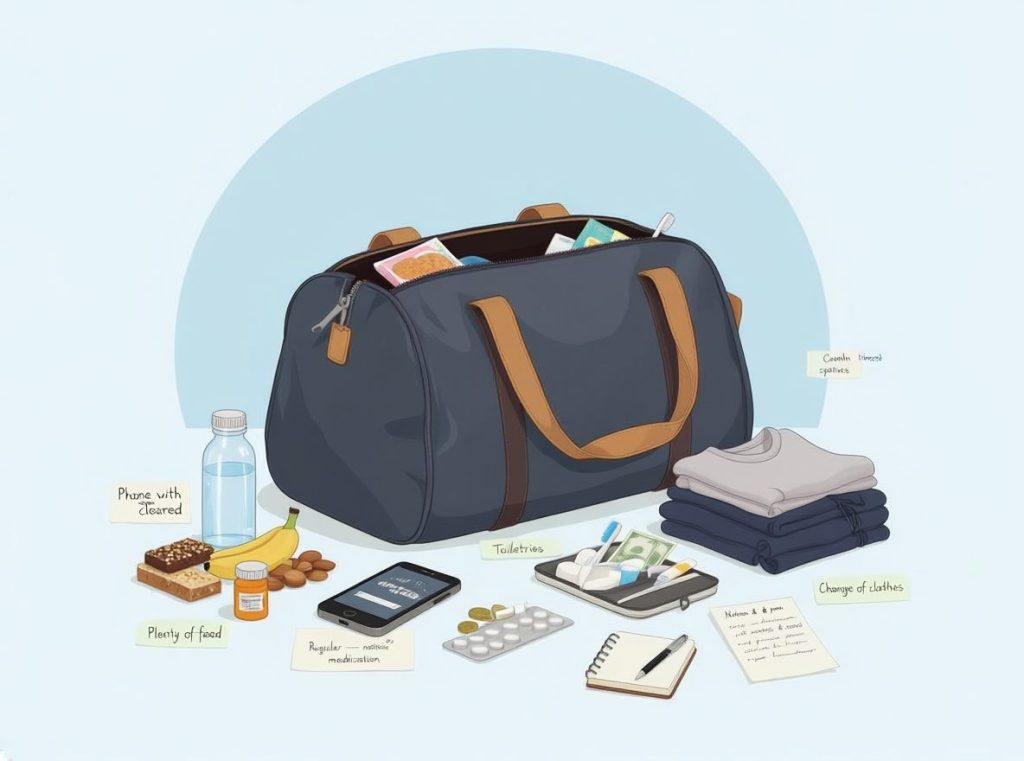
For you (the father)
- Your phone, with space cleared on it. You’ll want it for photos more than anything else — check you’ve got the storage before the day, not during it.
- Your own supply of food, and plenty of it. Easy to forget about yourself entirely once things get going, and hospital canteens keep unhelpful hours.
- A change of clothes. Ward heating tends to run high whatever the season, so pack shorts and a t-shirt alongside your usual joggers and jumper — you’ll likely want the lighter option at some point, even in January.
- Toiletries, including a toothbrush. Small thing, but nobody enjoys furry teeth after an all-nighter.
- Cash — notes and coins. Card machines go down. Vending machines don’t take contactless half the time, and some only take coins. £20 in fivers plus a handful of pound coins has saved me more than once.
- Any regular medication you take. Easy to forget when you’re focused on her and the baby, but don’t assume you can nip home for it.
- A notebook and pen, or a notes app. Useful for two things: jotting the names of midwives or doctors you deal with (handy later for thanks or feedback), and roughly logging timings — what happened, and when.
- Entertainment — a tablet, your phone, or a physical book. There may be stretches of time to fill while she and the baby sleep. Limit the phone scrolling where you can; a book gives your hands something to do that isn’t doom-scrolling.
- A list of who to call, already written down. You will not remember phone numbers or the right order to call people in when it actually happens. Write it the week before, not the night before.
Bring a copy of the birth plan — but adapt to the situation
If you’ve written one, print a copy and pack it. But before the day itself, have a real conversation about how attached you both are to what’s on it. Ours barely survived contact with the actual labour — most of it fell away within the first couple of hours, plans and all. Looking back, that was fine. The document was never really the point; being able to adjust together, in the moment, was what mattered.
Don’t take too much
It’s tempting to pack for every scenario, but remember: once visiting hours end, you’ll likely be heading home to rest, not staying overnight. Pack for the hours you’ll actually be there, not a week-long stay. You can always bring more in on the next visit if something’s missing.
The one thing that actually mattered
None of the kit is what got us through it. What helped was knowing, roughly, what my job was in the room — not medical, not decision-making, just: be calm, be present, and don’t ask “are you okay?” more than once every twenty minutes, because the honest answer is always going to be no, and asking repeatedly just makes it worse for both of you.
That’s not on any checklist. It should be.
If all of this sounds daunting to plan, it is — a bit. It’s a strange kind of holiday packing: unique circumstances, and far more important than any trip you’ve packed for before. If this isn’t your first child, you may be more familiar with the hospital bag than you ever were with a suitcase.
If you’re due soon and reading this at 1am because you can’t sleep — you’re not behind. You’re exactly on schedule.
Did you enjoy this article?
