
‘Ave a Go at Avocado
The blind taste-test game I invented in my kitchen when I noticed my daughter’s plate had stopped growing — and the bit of science that explains why it actually worked.
The same five foods, on repeat
Nothing dramatic. Just a plate that stopped changing.
I’d started noticing that my daughter’s meals had quietly narrowed down to the same safe handful of foods, and everything outside that list got the same reaction before she’d even picked up a fork: a look, a decision, and a “no thank you.” I didn’t want dinner to turn into a negotiation every night, but I did want her eating a wider spread of the healthy stuff. So instead of pushing harder at mealtimes, I built a game.
Ten bowls, one blindfold
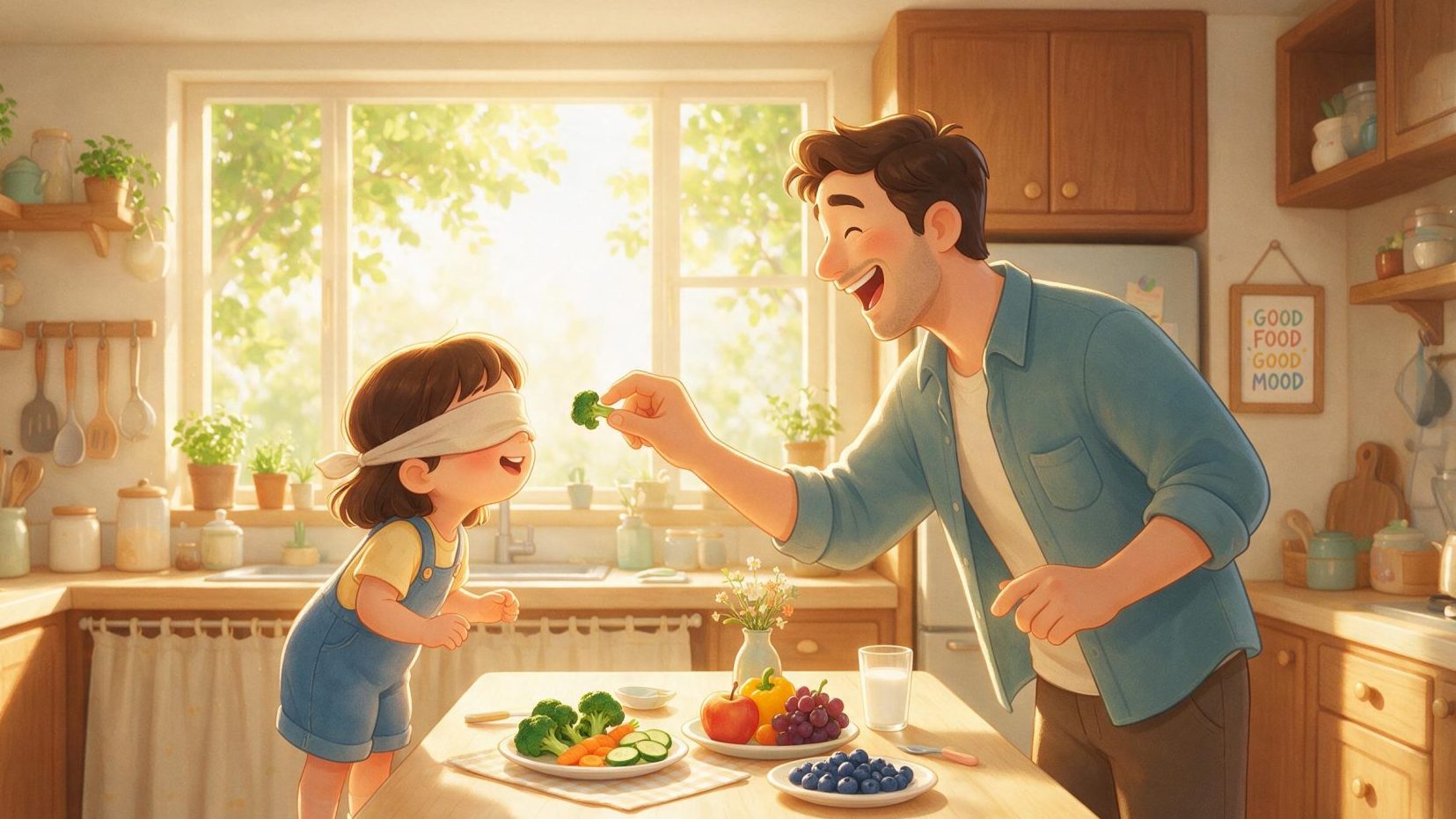
The idea was simple enough to set up on a Saturday morning: ten bowls, each one covered so she couldn’t see what was inside, numbered one to ten. Blindfold on, and one spoonful at a time. For each bowl she’d give the taste a score out of ten and have a guess at what food it was, and once all ten were done, the blindfold came off and we revealed everything together.
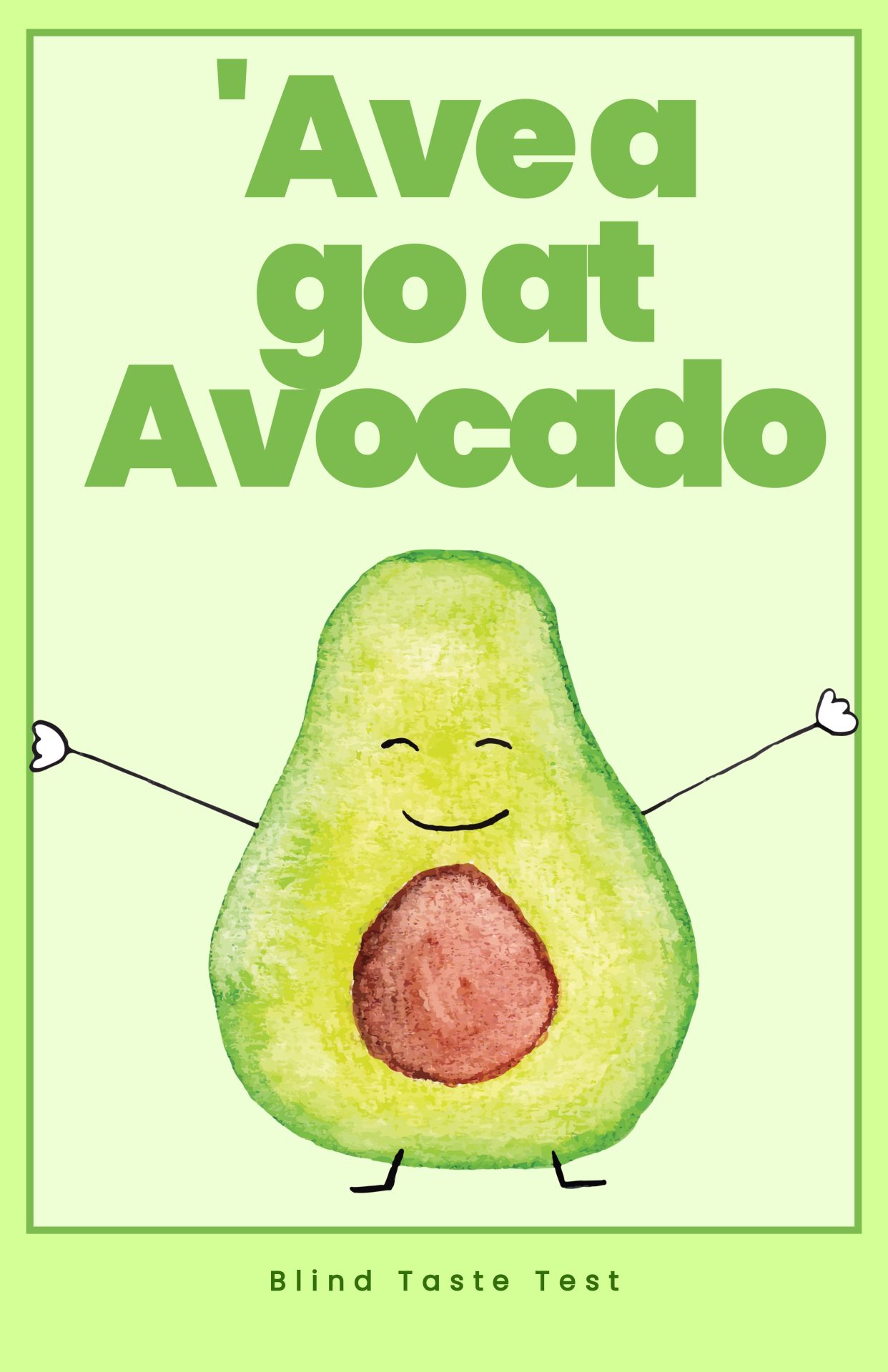
We named it ‘Ave a Go at Avocado and I knocked up a poster to make it feel like an actual event rather than “eat your vegetables, but weirder.” If you want to run your own version with your own kids, take the name — it’s yours.
The science
Why kids decide with their eyes first
This is the bit that made the game click for me. Children build up a mental picture of what “acceptable” food is supposed to look like, and a lot of the time they’re rejecting a food when it’s put in front of them — not when they actually taste it. The distrust happens at the sight of the thing, long before it reaches the tongue.
WHAT THE RESEARCH SAYS
This reluctance towards new or unfamiliar foods has a name — food neophobia — and it’s considered a completely normal stage of development, affecting an estimated 50–75% of children, typically peaking somewhere between the ages of two and six before it tends to ease off.
It’s thought to be an inherited, protective instinct: for most of human history, an unfamiliar-looking plant was a genuine risk, so a bit of caution around new food kept early humans safe. That same wiring is still switched on in a four-year-old staring down a runner bean.
Take away the sight of the food entirely, and you take away the veto. The blindfold means taste gets the first vote instead of appearance.
Spinach, of all things
The moment that got me was spinach. She scored it well without a clue what it was, and when the blindfold came off and I told her, she genuinely didn’t believe me. But she’d tasted it fairly, scored it fairly, and there was no arguing with her own number. Spinach has been on her plate without a fight ever since. The same thing happened with courgette, and again with runner beans — foods she’d have refused on sight, that she’d already decided she liked before she knew what they were.
The goal was never “like everything”
I want to be honest about what this game is actually for, because it’s easy to assume the aim is to trick your child into loving every vegetable going. It isn’t. The goal is simply to find out, honestly, what she does and doesn’t like — and then actually act on that information, by putting the foods she rated highly back on her plate regularly, instead of guessing at what she might eat and hoping for the best.
When she doesn’t like something
Some bowls get a low score, and that’s fine — that’s the point of playing. What matters is what happens in the next ten seconds. She gets a sip of water to clear the taste, and then I move straight on with energy, before there’s any time to dwell on it.
What I actually say
- “So what rating are you giving that one?”
- “Is that better or worse than the last bowl?”
- “Right, guess time — what do you think that was?”
The pace is what keeps her playing rather than shutting down. A dropped taste is just data, not a drama — and she’s already thinking about the next bowl before she’s had time to decide she hates the last one.
Play it again the next week
8–10 tries of a disliked food is roughly what research shows it takes before a child’s acceptance of it noticeably increases — one bad bowl is rarely the final verdict.
So we replayed the game every week or two, and any food she scored low gets another go, mixed in alongside one or two brand-new bowls. It’s not about wearing her down — it’s giving her taste buds enough goes to actually make up their mind, away from whatever her eyes decided the first time round.
Have a go at ‘Ave a Go at Avocado.
If your kitchen has its own version of the “same five foods” problem, I’d genuinely recommend an afternoon with some bowls, a blindfold, and a scorecard. You might find out your fussiest eater likes more than either of you thought.
Free downloadable PDF;
