


Every family’s night-time reality looks different, and there’s no single script that works for everyone. What follows isn’t a step-by-step manual — it’s what worked for us, and a few ideas worth trying or adapting to your own situation.
The rota that got us through it
A quick note: with UK paternity (aka. partner of the birth mother/adopter) leave capped at 2 weeks, most of this rota only kicks in once dad’s back at work — so for the early weeks, the balance will naturally look different. This is about the phase after that.
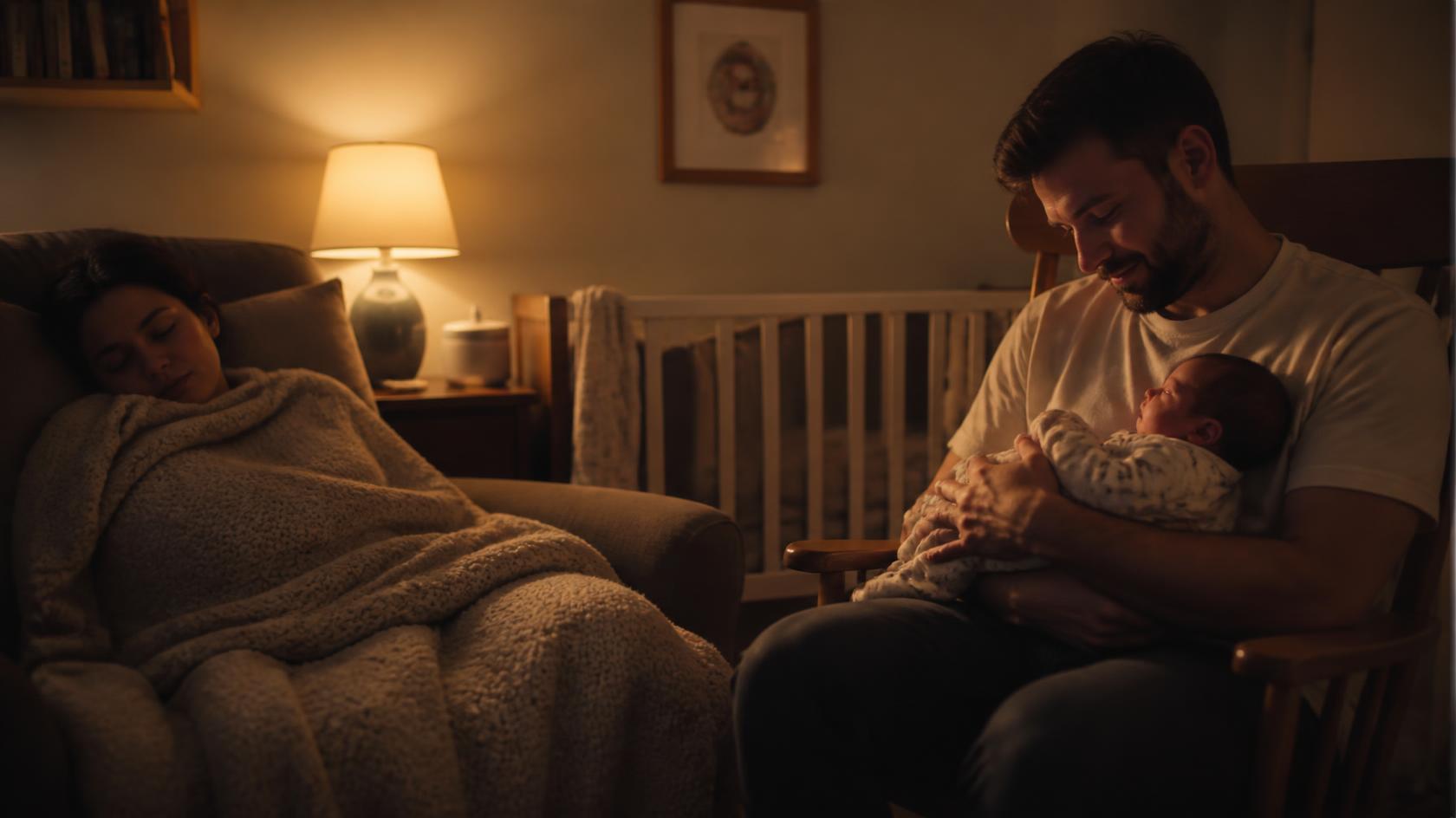
If we had another child, this is the system we’d use again: Sunday to Thursday, mum covers nights. Friday and Saturday, dad takes over. If dad’s working full-time, this split matters — it means he’s had proper sleep for the working week, while still taking real responsibility rather than leaving mum to do all seven nights on her own.
That last part is non-negotiable. Whatever system you land on, mum doing every single night isn’t sustainable, and it isn’t fair. A full, uninterrupted night’s sleep is genuinely important for health — not a luxury — and a rota means both parents get that most nights, even if not every night.
Alternating nights night-by-night is another solid option if a multi-day split doesn’t suit your routine.
If breastfeeding is part of the picture
This is where it gets more complicated. If your partner’s breastfeeding, she’ll likely be needed for feeds regardless of whose “night” it is — certainly in the early months. Two ways to handle it:
- She expresses milk in advance, so dad can handle feeds on his on-duty nights too.
- If expressing isn’t an option, she covers the feeds, and dad takes every other wake-up — settling, nappy changes, anything that isn’t a feed.
In our case, feeds needed mum every night for the first six months. After that point, the other wake-ups became dad’s to manage.
If you’ve got more than one young child
This is where it naturally gets more complicated — two children waking at different times can undo even a well-planned rota fast. Our approach: the on-duty parent handles both children for the night, still with the same goal of letting the other parent get a proper night’s sleep.
But be realistic about when that breaks down. If a night is genuinely overwhelming for the on-duty parent — both children unsettled at once, one of you running on no reserves — the off-duty parent needs to be flexible and accept they’ll likely be woken for the occasional bit of help. Agree this as a couple in advance, so it’s a shared understanding rather than a point of tension in the moment.
The one rule that protects both of you
Don’t both wake up for every cry. Unless something’s actually wrong, let the off-duty parent sleep through — that full sleep cycle is the entire point of the rota. If one of you is jumping up every time regardless of whose night it is, you’re both running on empty for no reason.
That said, dad should still join a handful of early wake-ups alongside mum before going solo — think of them as run-throughs. It means both of you actually know how to manage the night on your own, not just in theory.
When the plan doesn’t hold
It won’t, some nights. If you’re off-duty and still get woken up, stay calm and support each other — the rota is a framework, not a guarantee. What matters more than sticking to it perfectly is how you handle the nights it slips.
If you hit a bad stretch — several rough nights in a row — talk about it. Openly, calmly, before either of you is running on fumes. Adjust the plan if you need to. Waiting until one of you is burnt out or anxious before raising it just makes the conversation harder.
The mindset that made the difference
More than any rota, what actually got us through was thinking of it as a shared job — our joint responsibility to raise this child as well as we could, together. That framing kept both of us grounded when things got hard, and stopped the exhaustion turning into resentment.
It doesn’t last forever
Like most things, it’s a matter of time. If you’re in the thick of it, every day completed is a day closer to a more settled routine. How long that takes varies enormously by family — weeks for some, months for others. There’s no fixed timeline, just the knowledge that it does shift eventually.
The short version, if you’re too tired to read all of this
- Split the week rather than splitting every night — one parent covers most weeknights, the other covers weekends, or alternate night-by-night if that suits your routine better.
- One parent doing all seven nights isn’t sustainable — build in relief, whatever form that takes.
- If breastfeeding is involved, either she expresses in advance so dad can cover feeds too, or she handles feeds and dad takes every other wake-up.
- Don’t both wake up for every cry — protect the off-duty parent’s full sleep cycle unless something’s actually wrong.
- Do a few early “run-throughs” together before going solo, so both of you can manage independently.
- With more than one young child, the on-duty parent covers both — but the off-duty parent should expect occasional call-ins on genuinely rough nights.
- When a bad stretch hits, talk about it early and calmly — don’t wait until someone’s burnt out.
- Treat it as a shared job, not two individual shifts — that mindset carries you further than any rota does.
- It’s temporary. It varies by family, but it does pass.
Every setup is different — what worked for us might need adapting for yours. Take what’s useful, leave what isn’t.
Discover more from Dad Diary
Subscribe to get the latest posts sent to your email.
