
Every child is different, and what worked for us won’t map onto every situation. This is what we did, why it worked, and a couple of things I’d genuinely question if I did it all again.
What’s actually happening in their head
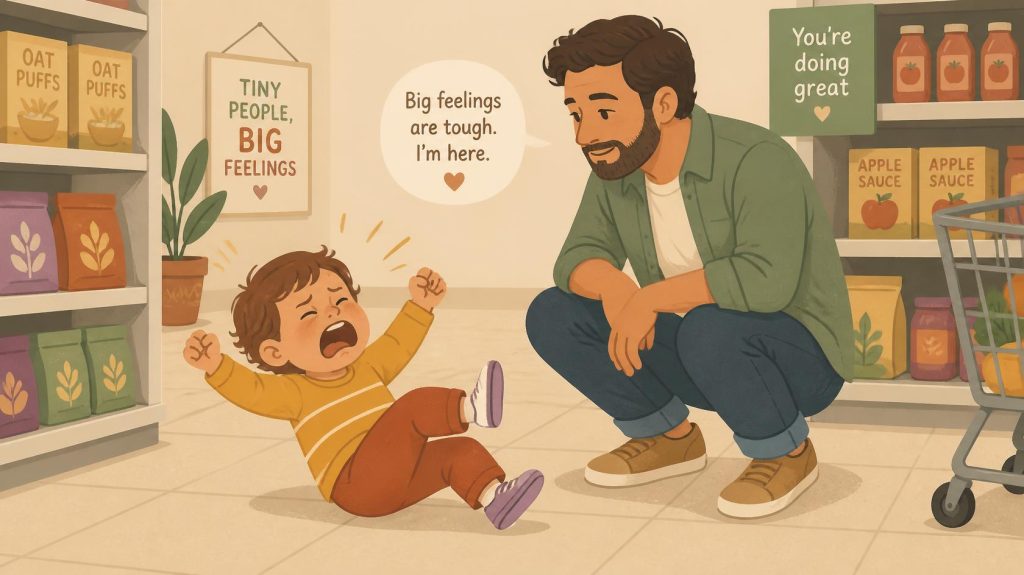
A toddler mid-meltdown isn’t being manipulative — their brain genuinely doesn’t have the tools yet to manage a big feeling. The part of the brain responsible for staying calm and thinking things through is still years from being fully wired up. What looks like defiance is closer to a system overload: too much feeling, no way to process it yet.
That’s worth holding onto, especially in public, when it’s tempting to read a meltdown as a performance for the room. It isn’t. It’s just badly timed.
What’s off the table: handing over a screen
One thing I’d say plainly: don’t reach for a device to stop a tantrum, however tempting it is in the moment. There’s real research behind this — a University of Michigan study following hundreds of young children found that relying on screens to calm tantrums was linked to worse emotional regulation later on, particularly in kids already prone to big reactions. It works instantly and costs you later. Worth knowing before you’re stood in a supermarket aisle reaching for your phone.
Early age: distraction, done honestly
When my daughter was younger, my go-to was distraction — but the honest kind. Never a promise I wasn’t going to keep (“we’ll go there next” when we weren’t). Instead, something genuinely engaging in the moment: “I need to find three yellow things before we get to the car — can you help me look?” It redirects attention without any dishonesty attached, and young children generally don’t yet have the vocabulary to name what they’re feeling anyway, so distraction meets them where they actually are developmentally.
As they get older: naming the feeling instead
Distraction gets harder to pull off as kids get older and more aware — eventually they clock what you’re doing. That’s the point to shift toward naming the emotion instead, and it’s genuinely not just a nicer way of talking. Labelling a feeling engages the thinking part of the brain and calms the reactive part — the naming itself does real work, not just the conversation around it.
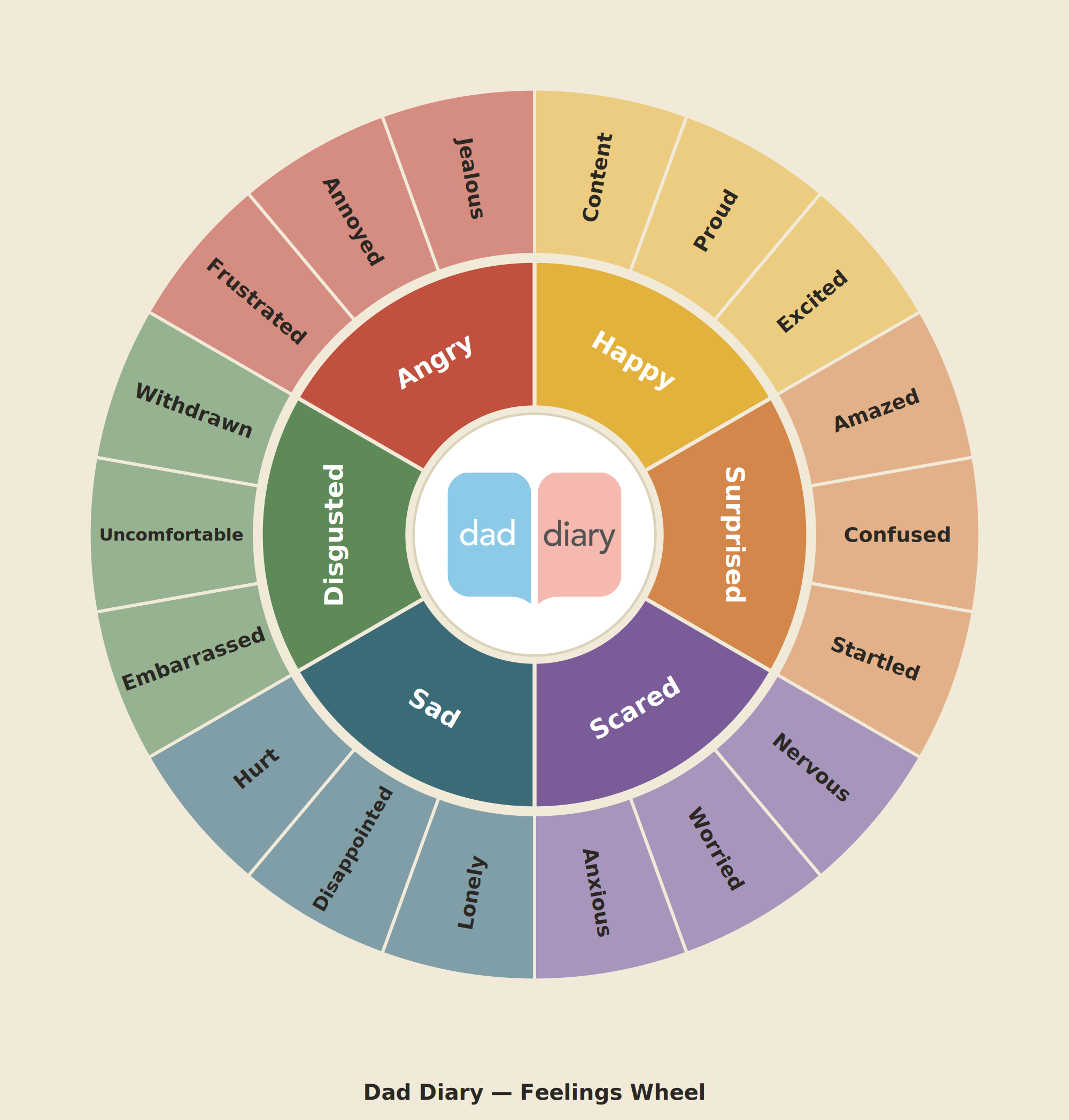
We turned this into something closer to a shared vocabulary lesson than a discipline moment — learning a new emotion word together, almost like a small language lesson in the middle of an ordinary day. Framed that way, nothing ever needs to feel too dramatic. “You’re disappointed” isn’t a big statement — it’s just accurate, and naming it accurately tends to take the heat out of the moment rather than adding to it.
Download the free Feelings Wheel
Holding the boundary — in as few words as possible
Once the feeling’s named, the boundary itself doesn’t move. “You’re disappointed, and we’re still leaving” — both parts said, then no further negotiation. Fewer words works better than more; a long explanation mid-meltdown just gives them more to push back against.
This is the bit that raises a fair question: isn’t refusing to budge just stubbornness? Not quite — the distinction is in the timing. Holding firm mid-tantrum isn’t about being immovable as a rule, it’s about not reversing a specific decision because of the volume of the reaction. You can still be flexible beforehand, and reconsider afterward once everyone’s calm. What you’re protecting against is the tantrum itself becoming the thing that changes outcomes — because once it works once, it becomes the child’s strategy.
The short version
- A tantrum isn’t manipulation — it’s a brain that doesn’t have the tools yet to manage a big feeling.
- Don’t use a screen to stop it. It works immediately and costs more later.
- With younger children, honest distraction works well — redirect attention without promising something you won’t follow through on.
- As they get older, shift toward naming the emotion — treat it as building shared vocabulary, not managing a crisis.
- Hold the boundary in as few words as possible, and don’t reverse a decision because of how loudly it was protested.
- Not backing down mid-tantrum isn’t stubbornness — it’s specific to that moment. Flexibility before and after is still entirely normal.
Every child and every household is different — take what’s useful here, and adapt the rest. This reflects what worked for our family; if tantrums are a persistent struggle in yours and none of this helps, it’s worth speaking to your GP or health visitor for advice suited to your child specifically.
Download / Save the Free Feelings Wheel
Discover more from Dad Diary
Subscribe to get the latest posts sent to your email.
